Home Makeover Before and After
Introduction
A successful Home Makeover Before and After transformation is about more than making a room look attractive. It is about improving the way a home functions, feels, and supports everyday life. Whether you’re a homeowner planning a complete renovation or simply refreshing a single room, thoughtful design decisions can dramatically improve both comfort and visual appeal.
Many people believe that stunning home transformations require expensive renovations. However, some of the most impressive results come from simple changes such as better Furniture Arrangement, strategic Paint Color Changes, improved Lighting Upgrades, and smart Home Styling techniques. Even a modest budget can produce remarkable results when guided by clear Design Goals and careful planning.
Before making any changes, it is important to understand what works, what doesn’t, and how each design decision contributes to the overall transformation. This guide will help you navigate every stage of the makeover process while avoiding costly mistakes.
Why Home Makeover Before and After Projects Are So Popular
Before-and-after transformations have become one of the most popular categories in interior design because they provide visual proof of what is possible. Seeing a dramatic improvement inspires homeowners to take action and imagine the potential within their own spaces.
A successful makeover offers several benefits:
- Improves daily comfort and functionality
- Increases property appeal
- Makes better use of available space
- Creates a more organized environment
- Reflects personal style and preferences
- Boosts confidence and satisfaction as a homeowner
The appeal of transformation goes beyond aesthetics. Many homeowners discover that improving their living environment positively impacts productivity, relaxation, and overall well-being.
How to Plan a Successful Home Makeover Before and After Project
Every successful transformation starts with proper planning. Skipping the planning stage often leads to wasted money, inconsistent design choices, and disappointing results.
Start by evaluating your current space honestly.
Ask yourself:
- What frustrates you about the room?
- Which areas feel crowded?
- Is storage sufficient?
- Does the room receive enough natural light?
- Is the layout functional?
A useful first step is taking a Baseline Photo of each room. These images help document progress and make it easier to compare results later.
Next, create a realistic budget. Effective Budget Planning allows you to prioritize high-impact improvements while avoiding unnecessary spending.
Many designers recommend creating a Mood Board using platforms like Pinterest. Collect examples of colors, furniture styles, flooring materials, and decorative elements that match your vision. This process helps maintain consistency throughout the project.
Creating Design Goals Before Starting
One of the biggest mistakes homeowners make is beginning a makeover without clearly defined objectives.
Strong Design Goals help guide every decision throughout the Design Process.
Examples include:
| Design Goal | Expected Outcome |
| Increase storage | Better organization |
| Improve lighting | Brighter living spaces |
| Modernize appearance | Updated style |
| Maximize space | Better functionality |
| Create relaxation areas | Improved comfort |
When goals are clearly defined, it becomes easier to evaluate whether each purchase supports the overall vision.
For example, if your goal is improving functionality in a small room, oversized furniture may work against that objective regardless of how attractive it looks.
The Importance of Room Layout and Space Planning
One of the most overlooked aspects of a Home Makeover Before and After project is the Room Layout.
Many rooms feel cramped not because they are small, but because the furniture is arranged poorly.
Effective Space Planning focuses on:
- Traffic flow
- Furniture placement
- Accessibility
- Visual balance
- Functionality
Good layouts create a natural movement pattern that makes rooms feel larger and more comfortable.
When planning a layout, consider:
Key Room Layout Principles
- Keep major walkways clear.
- Avoid blocking windows.
- Create focal points.
- Balance furniture sizes.
- Leave sufficient breathing room.
Modern Room Visualization software and Virtual Room Design tools can help homeowners experiment with different arrangements before moving heavy furniture.
These Visualization Tools reduce guesswork and improve decision-making during the planning stage.
Before and After Room Makeover: Understanding Transformation Principles
A successful Before and After Room Makeover relies on several core design principles working together.
The most effective transformations usually involve improvements in:
- Color
- Lighting
- Layout
- Storage
- Texture
- Furniture scale
Many professional designers begin by analyzing the room’s strengths and weaknesses.
For example:
Before
- Dark paint colors
- Poor furniture placement
- Limited storage
- Insufficient lighting
- Visual clutter
After
- Fresh paint colors
- Better furniture layout
- Smart shelving solutions
- Layered lighting
- Organized design
The result is a space that feels larger, brighter, and more functional without necessarily increasing square footage.
Paint Color Changes That Create Instant Impact
Among all makeover strategies, few offer a better return on investment than Paint Color Changes.
Fresh paint can dramatically alter how a room feels and functions.
When selecting Paint Colors, always consider:
- Natural light levels
- Room size
- Existing finishes
- Flooring materials
- Desired atmosphere
A North-facing Room often appears cooler throughout the day, making warm tones a better choice.
A South-facing Room receives stronger sunlight, allowing both cool and warm colors to work effectively.
Many designers use an Accent Wall to add visual interest without overwhelming the room. A bold Navy Wall can create depth and sophistication when balanced with lighter surrounding colors.
If your home includes attractive Existing Trim, consider preserving it as part of the overall design strategy rather than replacing it unnecessarily.
How Lighting Upgrades Transform a Space
Lighting has a greater impact on design than many homeowners realize.
Poor lighting can make even beautifully decorated rooms feel uncomfortable.
Modern Lighting Upgrades focus on layering multiple light sources.
A balanced lighting strategy includes:
| Lighting Type | Purpose |
| Ambient | General illumination |
| Task | Focused activities |
| Accent | Highlight features |
Using Warm LED Lighting helps create a welcoming atmosphere while improving energy efficiency.
Installing a Dimmer Switch provides additional flexibility by allowing homeowners to adjust brightness levels throughout the day.
Natural light remains equally important. Maximizing Natural Light through window treatments, mirrors, and strategic furniture placement can significantly improve a room’s appearance.
Good lighting also enhances room proportions, texture, and overall visual comfort.
Furniture Arrangement Strategies That Instantly Improve Any Room
One of the easiest ways to achieve a dramatic Home Makeover Before and After transformation is by improving your Furniture Arrangement. Surprisingly, many homeowners purchase new furniture when the real problem is how the existing pieces are positioned.
Every room should support the way you actually live. Instead of filling every corner, arrange furniture to encourage conversation, improve movement, and highlight the room’s best features.
Smart Furniture Arrangement Tips
- Keep walkways at least 30–36 inches wide.
- Position seating around a natural focal point, such as a fireplace or television.
- Avoid pushing every piece of furniture against the wall.
- Balance large and small furniture throughout the room.
- Leave enough breathing space between furniture pieces.
Proper Furniture Placement also improves Room Proportions. Oversized furniture in a small room makes the space feel cramped, while appropriately scaled pieces create an open and inviting atmosphere.
When planning your layout, think about Scale rather than simply filling empty spaces. Every piece should contribute to the room’s overall functionality instead of creating unnecessary clutter.
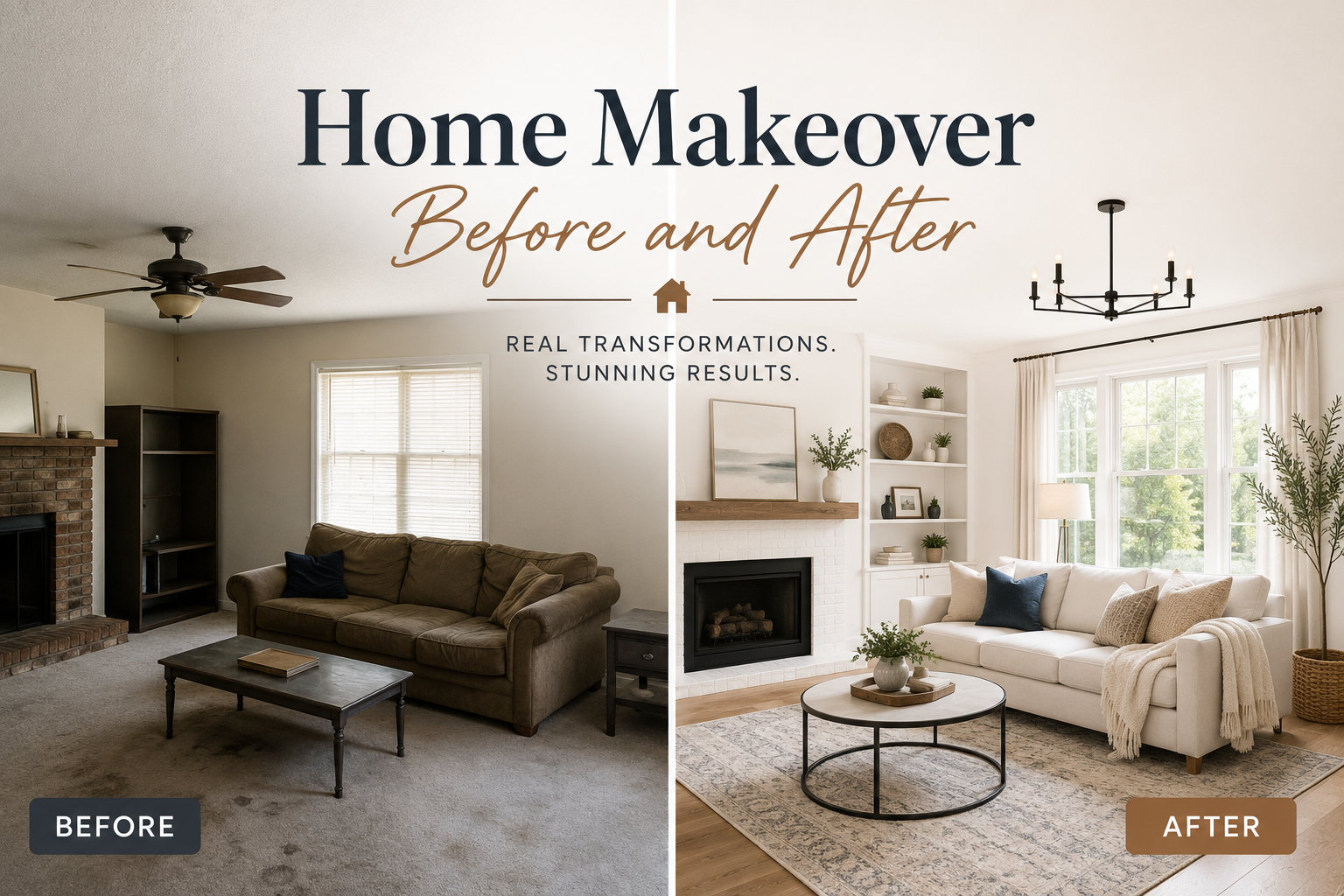
Living Room Makeover Ideas That Deliver Stunning Results
The living room is often the first space guests see, making it one of the most rewarding areas for a makeover.
A successful Living Room Makeover combines comfort, functionality, and style.
Before
Many living rooms suffer from:
- Poor lighting
- Outdated furniture
- Too much clutter
- Dark paint colors
- Limited storage
- Poor traffic flow
After
After thoughtful improvements, the same room can include:
- Bright neutral walls
- Comfortable seating
- Layered lighting
- Decorative Area Rugs
- Stylish shelving
- Better furniture placement
- Modern accessories
Creating comfortable Conversation Zones helps the room feel more welcoming. Arrange sofas and chairs so people naturally face each other instead of pointing every seat toward the television.
Adding a large Area Rug helps define the seating area while introducing texture and warmth.
For homeowners seeking Modern Interior Design, choose clean lines, neutral colors, natural materials, and minimal clutter. This timeless approach remains stylish for years without feeling outdated.
Bedroom Makeover Ideas for Better Comfort and Relaxation
A bedroom should feel like a peaceful retreat after a busy day.
A successful Bedroom Makeover focuses on comfort, organization, and calming design.
Start by selecting soothing Paint Colors that promote relaxation. Soft earth tones, muted greens, warm whites, and light blues remain popular choices.
Lighting also plays a significant role.
Instead of relying on one ceiling fixture, combine:
- Bedside lamps
- Reading lights
- Accent lighting
- Warm LED Lighting
Storage is equally important.
Decluttering bedside tables, installing additional Shelving, and using under-bed storage immediately improve both appearance and functionality.
Choose furniture that fits the room’s proportions. Oversized beds and dressers often overwhelm smaller bedrooms, while appropriately sized furniture creates better balance.
Adding natural textures such as wood, linen, and woven baskets completes the transformation.
Home Office Design That Increases Productivity
With more people working remotely, a functional Home Office Design has become essential.
An effective workspace supports productivity while remaining comfortable throughout the day.
When planning a home office, prioritize:
- Ergonomic seating
- Proper desk height
- Natural lighting
- Storage
- Cable management
- Quiet surroundings
Position the desk near a window whenever possible to maximize Natural Light.
If natural light is limited, combine overhead fixtures with adjustable task lighting to reduce eye strain.
Good organization also contributes to productivity.
Use floating shelves, filing cabinets, and decorative storage boxes to maintain a clutter-free environment.
A well-designed home office proves that functionality and style can work together seamlessly.
Flooring Ideas That Refresh the Entire Home
Replacing outdated flooring creates one of the most dramatic improvements during a Home Makeover Before and After project.
Today’s Flooring Ideas balance durability, affordability, and modern style.
Popular options include:
| Flooring Type | Advantages |
| Luxury Vinyl Plank | Waterproof, affordable, durable |
| Engineered Hardwood | Elegant appearance with stability |
| Laminate Flooring | Budget-friendly and easy to maintain |
| Porcelain Tile | Excellent for kitchens and bathrooms |
| Hardwood Flooring | Long-term value and timeless appeal |
If replacing flooring isn’t possible, decorative Area Rugs provide an affordable alternative.
Area rugs:
- Define spaces
- Add warmth
- Reduce noise
- Introduce texture
- Protect flooring
Choose rug sizes that properly fit your furniture rather than selecting rugs that are too small.
Decluttering Tips That Make Every Room Feel Larger
One of the least expensive improvements is simply removing unnecessary items.
Effective Decluttering Tips improve organization while making rooms appear brighter and more spacious.
Start by asking:
- Do I use this item regularly?
- Does it support my design goals?
- Can it be stored elsewhere?
- Does it add value to the room?
A practical decluttering checklist includes:
✅ Remove duplicate decorations
✅ Organize visible cables
✅ Store seasonal items
✅ Donate unused furniture
✅ Use baskets for everyday storage
✅ Install decorative shelving
Cleaner rooms naturally improve Home Decoration because carefully selected furniture and accessories become the focus instead of clutter.
Many professional designers recommend decluttering before purchasing any new decor.
Home Styling Ideas That Bring Every Room Together
Successful Home Styling combines color, texture, furniture, lighting, and accessories into one cohesive design.
Rather than decorating randomly, focus on creating visual harmony.
Popular Home Styling Ideas include:
- Layer different textures.
- Mix natural materials with modern finishes.
- Add indoor plants.
- Display meaningful artwork.
- Use decorative pillows and throws.
- Incorporate mirrors to reflect light.
Thoughtful Interior Decorating also involves repeating colors throughout the home to create continuity.
For example, using similar wood finishes or accent colors across multiple rooms makes the entire house feel professionally designed.
These techniques work equally well for traditional, farmhouse, Scandinavian, and Modern Home Decor styles.
Using AI Interior Design for Better Planning
Technology has transformed how homeowners plan renovations.
Modern AI Interior Design platforms allow users to experiment with layouts, colors, furniture, and finishes before making purchases.
Many AI Design Tools now provide:
- Automatic room layouts
- Furniture recommendations
- Paint color previews
- Material comparisons
- Photorealistic Renderings
- Budget estimates
Homeowners can also use Home Design Software and Design Visualization platforms to compare multiple design options without physically moving furniture.
These tools save time, reduce expensive mistakes, and help homeowners make informed decisions before beginning a renovation.
Whether you’re planning a single-room refresh or a complete Home Transformation, digital visualization makes the design process easier than ever.
Kitchen Makeover Ideas That Add Style and Value
A well-planned Kitchen Makeover is one of the smartest investments in any Home Makeover Before and After project. Since the kitchen is one of the most frequently used spaces, even small improvements can dramatically enhance both functionality and home value.
Instead of focusing only on expensive renovations, prioritize upgrades that offer the greatest visual impact.
Budget-Friendly Kitchen Makeover Ideas
- Repaint cabinets instead of replacing them.
- Install modern cabinet handles.
- Upgrade to energy-efficient lighting.
- Add open shelving for storage and display.
- Replace outdated faucets.
- Install a stylish backsplash.
- Organize countertops to reduce clutter.
Lighting plays a major role in kitchen design. Combining ceiling lighting with under-cabinet Warm LED Lighting creates a brighter workspace while improving the overall atmosphere.
If you’re working with limited space, use vertical Shelving and smart storage organizers to maximize every inch.
A well-designed kitchen isn’t just beautiful—it makes cooking, cleaning, and entertaining much easier.
Small Room Design and Space Optimization
One of the biggest challenges homeowners face is decorating smaller rooms. Fortunately, smart Small Room Design techniques can make compact spaces feel significantly larger.
Successful Space Optimization focuses on making every square foot useful.
Ways to Maximize Small Rooms
- Choose multi-functional furniture.
- Use floating shelves instead of bulky cabinets.
- Hang curtains close to the ceiling.
- Use mirrors to reflect natural light.
- Keep furniture proportional to the room.
- Minimize unnecessary decorations.
A light color palette also helps small rooms appear more spacious. Pair soft wall colors with carefully selected furniture to maintain an open, airy feel.
Using smart Furniture Layout principles prevents overcrowding while improving movement throughout the room.
Remember, empty space is an important design element. Not every corner needs to be filled.
Budget Interior Design Without Sacrificing Style
A beautiful home doesn’t always require a luxury budget.
Many successful Budget Interior Design projects rely on creativity rather than expensive materials.
Start by identifying updates that provide the greatest visual improvement.
High-Impact, Low-Cost Improvements
| Improvement | Estimated Impact |
| Fresh paint | ★★★★★ |
| Decluttering | ★★★★★ |
| New lighting | ★★★★☆ |
| Decorative Area Rugs | ★★★★☆ |
| Rearranging furniture | ★★★★★ |
| Indoor plants | ★★★★☆ |
| Updated hardware | ★★★☆☆ |
Shopping during seasonal sales, buying second-hand furniture, and repurposing existing decor can significantly reduce costs.
Many homeowners are surprised by how dramatically a room changes simply by improving its layout and lighting.
Good design is about thoughtful choices—not expensive purchases.
DIY Interior Design: Create Professional Results Yourself
Not every makeover requires hiring an interior designer. Many homeowners successfully complete impressive DIY Interior Design projects with careful planning and patience.
Before starting, gather inspiration from magazines, Pinterest, and professional designers.
Then create a step-by-step plan.
DIY Project Checklist
✔ Measure every room accurately.
✔ Set a realistic budget.
✔ Purchase paint samples first.
✔ Test lighting before installation.
✔ Assemble furniture carefully.
✔ Photograph progress along the way.
Simple DIY projects include:
- Painting walls
- Installing floating shelves
- Updating light fixtures
- Replacing cabinet hardware
- Hanging artwork
- Styling bookshelves
- Decorating with plants
Even beginners can achieve professional-looking results by working methodically and avoiding rushed decisions.
Interior Design Planning: The Secret Behind Every Successful Makeover
Professional designers rarely begin decorating immediately. Instead, they spend significant time on Interior Design Planning.
Planning helps ensure every design decision supports the overall vision.
A successful plan includes:
Step 1: Evaluate the Existing Space
Identify strengths and weaknesses.
Step 2: Define Priorities
Focus on improvements that provide the greatest value.
Step 3: Create a Budget
Allocate funds wisely and prepare for unexpected expenses.
Step 4: Select a Design Style
Whether you prefer modern, traditional, Scandinavian, or farmhouse design, consistency is essential.
Step 5: Develop a Timeline
Breaking large projects into manageable phases reduces stress and improves decision-making.
Good planning transforms complicated renovations into organized, achievable projects.
Home Makeover vs. House Renovation: What’s the Difference?
Many homeowners confuse a makeover with a renovation, but the two projects differ significantly.
| Home Makeover | House Renovation |
| Focuses on appearance | Focuses on structural improvements |
| Usually lower cost | Often higher cost |
| Faster completion | Longer timeline |
| Cosmetic updates | Construction work |
| DIY-friendly | Often requires professionals |
A House Renovation may involve removing walls, replacing plumbing, or updating electrical systems.
A Home Makeover Before and After project typically focuses on improving appearance through decorating, organization, lighting, furniture, and finishes.
Understanding the difference helps homeowners set realistic expectations before beginning a project.
Real Before and After Transformation Examples
Every successful makeover starts with recognizing a room’s potential.
Example 1: Living Room
Before
- Dark walls
- Heavy furniture
- Poor lighting
- Cluttered layout
After
- Bright neutral paint
- Modern furniture arrangement
- Layered lighting
- Large Area Rug
- Better conversation zones
Example 2: Bedroom
Before
- Outdated furniture
- Limited storage
- Dark colors
After
- Soft calming paint
- Functional storage
- Better lighting
- Comfortable layout
Example 3: Home Office
Before
- Poor organization
- Weak lighting
- Crowded workspace
After
- Ergonomic desk
- Floating shelving
- Organized storage
- Improved productivity
These examples demonstrate that thoughtful planning often delivers dramatic results without requiring expensive structural renovations.
Expert Tips for Long-Lasting Home Makeover Success
Professional interior designers consistently follow a few important principles that help create timeless spaces.
Expert Recommendations
- Prioritize functionality before decoration.
- Invest in quality furniture that lasts.
- Layer different textures for visual interest.
- Balance natural and artificial lighting.
- Keep decorative accessories simple.
- Update your home gradually instead of rushing every room.
- Choose timeless design elements over short-term trends.
- Review your design goals before making every major purchase.
The most successful Home Makeover Before and After projects are not always the most expensive—they are the ones that improve everyday living while reflecting the homeowner’s personality and lifestyle.
Frequently Asked Questions (FAQ)
What is a Home Makeover Before and After?
A Home Makeover Before and After compares the condition of a home before improvements with its appearance after the makeover is complete. It highlights changes in layout, paint colors, furniture arrangement, lighting, and decor, helping homeowners visualize the transformation and gather inspiration for their own projects.
What is the difference between a home makeover and a home renovation?
A home makeover focuses mainly on cosmetic improvements such as decorating, painting, furniture updates, lighting upgrades, and home styling. A Home Renovation often involves structural changes like remodeling walls, replacing plumbing, or updating electrical systems. Makeovers are generally faster, more affordable, and suitable for DIY projects.
How can I achieve a home makeover on a budget?
A budget-friendly makeover starts with proper planning and prioritizing high-impact improvements. Simple updates like Paint Color Changes, better Furniture Arrangement, adding Area Rugs, improving lighting, decluttering, and incorporating modern home decor can dramatically improve a space without requiring a large investment.
Can AI tools help with home makeover planning?
Yes. Modern AI Interior Design platforms and AI Design Tools allow homeowners to experiment with room layouts, furniture placement, paint colors, and materials before purchasing anything. Many Home Design Software programs also provide Photorealistic Renderings and Design Visualization, making it easier to avoid expensive mistakes.
Which room should I renovate or redesign first?
Most interior designers recommend starting with the Living Room Design or kitchen because these rooms have the greatest impact on daily living and often provide the highest return on investment. However, if your bedroom or home office affects your comfort or productivity more, begin there instead.
How long does a typical home makeover take?
A single-room makeover can often be completed in a weekend or a few days, depending on the amount of work involved. A complete Home Makeover Before and After project covering multiple rooms may take several weeks or even months, especially if flooring, lighting, or major upgrades are included.
Is DIY interior design a good option for beginners?
Absolutely. Many homeowners successfully complete DIY Interior Design projects by planning carefully, setting a realistic budget, and tackling one room at a time. Starting with painting, decorating, shelving, lighting upgrades, and furniture rearrangement allows beginners to build confidence while achieving professional-looking results.
Conclusion
A successful Home Makeover Before and After project is about much more than improving appearances—it’s about creating a home that better supports your lifestyle, reflects your personality, and adds long-term value. Whether you’re refreshing a single room or transforming your entire home, thoughtful Interior Decorating, smart Space Planning, strategic Furniture Arrangement, modern lighting, and carefully selected materials all contribute to a dramatic transformation.
Remember that every successful makeover begins with clear planning, realistic budgeting, and well-defined design goals. Small improvements like decluttering, updating paint colors, improving room layouts, and adding modern decor often produce the biggest visual impact. By combining practical design principles with creativity and patience, homeowners can achieve beautiful, functional spaces without overspending.
Use the ideas, tips, and strategies in this guide as inspiration for your own makeover journey, and you’ll be well on your way to creating a home that looks better, feels more comfortable, and works beautifully for years to come.